Monday, 15 October 2012

Prop/Costume planning

For the Estate scene where the violence will take place, the characters will be dressed in Balaclavas, baggy jeans/tracksuit, hoodies and equip a crowbar and metal pole. 

My aim is to make the cast look realistic throughout our thriller video. Using firearms would be very predictable and move the theme away from a serious psychological thriller.  


During the Cafe, we will see the Witness and the Killer wearing different clothes to the estate scene. This highlights the change of day, thus emphasising the flashbacks. 

Both the killer and witness will be wearing casual clothing, e.g. simply jeans, t-shirt and a jacket. This will show the characters both in as civilians, creating an interesting turn of events as our audience discover the Killer's identity. 

Sunday, 14 October 2012

Casino Royale: Textual Analysis

The opening scene of 'Casino Royale' is another example of a good thriller opening. It incorporates flashbacks of action to break up the present day narrative. This is different to the analysis of 'The Dark Knight' which maintains a present day narrative where all the action takes place. I am analysing Casino Royale because in our thriller, I would like to incorporate flashbacks running alongside a present day narrative. 

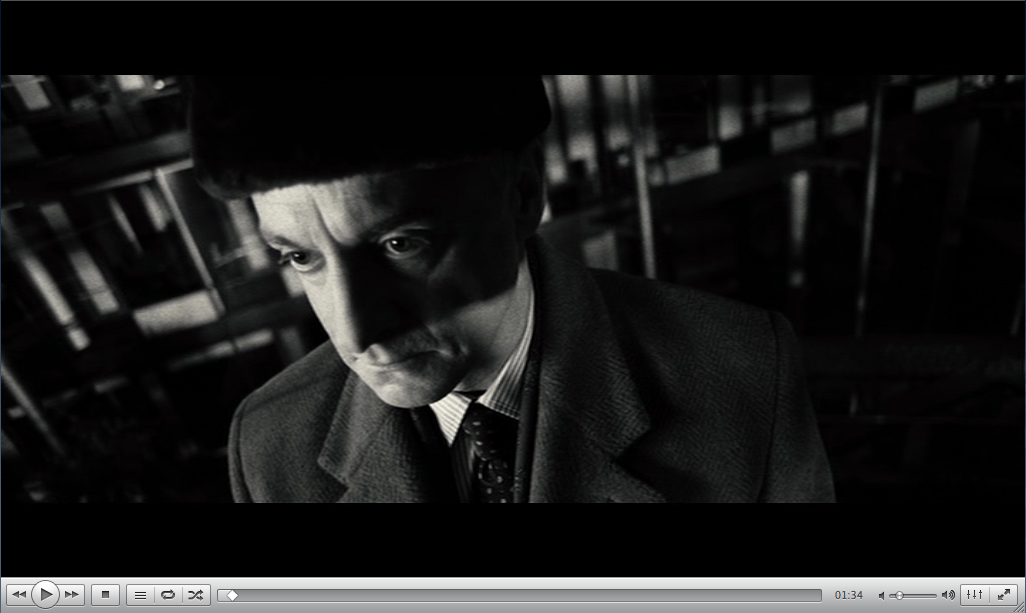
The scene is shot in black and white, whilst the use of a lower-third title introduces the location. As an audience who would typically associate present day James Bond films as being shot in colour, we can assume that this opening scene is part of a flashback, however we later interpret it as an establishing scene, reflecting on the James Bond sequel. (We are then acquainted with present day during the Uganda scene after the credits). During this opening scene the use of limited lighting is crucial and the setting is made eerie by the diegetic sound of the blowing wind. The car pulling up outside the establishment signifies that the passenger may come in to contact with more people, i.e. a meeting of some sort.


This long-shot is then followed by two low-angle shots of a man (Dryden) exiting a vehicle and entering the building via an ascending elevator. Here we are introduced to our first character. The use of these angles puts the character in a powerful position and reflects on the man's, perhaps middle/upper class status that is represented by the estate car and his shirt and tie. The use of slowly ascending violins during the shot of the elevator creates more of an enigmatic feel to our introduction so far. 


The elevator scene is then followed by an interesting use of a high-angle shot of Dryden. Typically high-angles are used to display the vulnerability of a character and this could suggest that Dryden will encounter trouble when entering the building. Here we learn that he may not be as powerful as we first thought. Following this, a close up of the floor number in the elevator is displayed. As the floor number slowly ascends, this adds suspense, as if this is a count down to something that will take place when Dryden exits the elevator.


When exiting the elevator, a mid-angle shot of the character walking across the building is seen. The camera follows slowly behind, panning in, which we can assume was used either by a track or dolly to create this clean movement. Having the echoing footsteps as diegetic sound, provides the shot with more of an enigma. This perhaps infers that the destination that the character is heading to, is where action will take place or we will learn more about the story. 


When entering the office, an interesting use of a slight tracking across to the open door is used following by an elevation of the camera. This is a shot I find particularly effective because it emphasizes Dryden's entrance into the room. 


After moving over to the desk and switching the light on, a close-up shot is used to express Dryden's fear and surprise. This further adds suspense for the audience, by wanting to know what it is that has taken him off guard. 


Following the shot of the safe, we hear James Bond's voice before sitting in a chair behind Dryden. This is altogether an effective introduction to bringing in the second character. The use of chiaroscuro lighting on Bond's face is particularly strong here. This has mixed connotations of a split-personality and suggests he may have bad intentions of what will come of Dryden. This also adheres to the violent flashbacks that are to follow. At this point, it may leave the audience questioning what moral character James Bond will now play for the duration of the film.


Saturday, 13 October 2012

The Dark Knight: Textual Analysis

The opening scene of 'The Dark Knight' immediately sets the standard as a dark and sinister film. 


During the opening scene, an extreme long shot is used as an establishing shot of Chicago city centre. Whilst panning in, the absence of dialogue with a non-diagetic soundtrack beginning to amplify, initiates the dark suspense. The soundtrack itself has connotations of peace and tranquility, however as the camera pans closer towards the dark-tinted window on one of the skyscrapers, this changes and suddenly the situation seems slightly more hasty. From an audience's perspective, the suspense has been maintained to immediately bring in the action. Here, the first piece of diegetic sound is used when the soundtrack is momentarily interrupted by a gun firing at a window and the sound of glass shattering.  


The camera then moves inside the skyscraper to the room of the smashed window. The scene is shot using a medium close up from behind two masked characters. This further confirms that action is about to take place and the masked characters suggests that it will be an act of criminal activity. Typically of comic-book derived films, action scenes will often be the main focus of a film introduction, which will see the film play out and have our superhero bring about justice. The audience should already be able to identify this.  i love male rods up my ass


In the following scene another establishing shot of the busy city is used before zooming from behind a man holding a clown mask similar to what we have just seen the two men in the window wearing.  The camera then zooms in to a close up of the clown mask and this supports the sinister connotations that are beginning to build. There is still an absence of dialogue, however this builds suspense whilst the soundtrack has been followed through. The soundtrack then picks up tempo towards the end of the scene and the texture thickens, by amplifying and introducing drums. Altogether this brings about a transition from having a subtle soundtrack to fast passed.


In this scene, the audience is introduced to the first piece of dialouge, “Three of a kind, Lets do this”. The use of this dialogue relates to a deck of cards. Three of a kind is a term used in a game of Poker, highlighting that they are all the same and are in this together. It also suggests that somebodies lives' may be gambled with, just like playing Poker (in this case, the civilians in the bank). This is further supported by the guns props in the scene and the mid-shot from behind the three characters sitting the car, paints a tainted picture of the sinister journey they are about to take and the acts that follow.


During the scene of entering the banka steady-cam is used as we see the camera following the clowns running right up to the cashiers desk. This scene mostly uses medium shots in order to have the clowns and bankers in the same shot. 


In a following scene after a scene of one of the clowns breaking into the cash vault, we are acquainted with the bank owner. Before this we had seen the camera move back to the owner as the clowns entered the building, suggesting he was going to take action. What is interesting is how the bank owner goes unnoticed by the clowns and this begins to build up several enigmatic codes when he says
 “do you have any idea who your stealing from?”. This automatically makes the audience start questioning, Who is this bank owner? And is he affiliated with batman? The power hierarchy clearly shifts when the bank owner comes into shot, with the use of shot-reverse-shot between the bank owner and the two clowns hiding away. This is important because as an audience this is the first threat which has posed the clowns, up until now they have been the dominant figures in the bank, able to command the civilians and bank staff.


The ending scene finishes with two of the five clowns left, as the other clowns have been double-crossed and killed. The scene is shot as shot-reverse-shot with lots of dialogue. The clown standing to the left says to the other “I’m betting the joker told you to kill me as soon as we loading the cash”, The other replies “No,no,no,no, I killed the bus driver”, which again leaves the audience contemplating more enigmatic codes. We all of a sudden question who the bus driver is and if this clown is telling the truth. We are left wondering Where is Batman, why did the clowns double cross each other and when will the Joker appear, as he has continuously been mentioned across the opening scene.


When the bus enters through the doors, we are left with the biggest enigmatic codes yet, as we now question who the driver of the bus is and if this clown who has managed to survive, is the Joker. We know there are 6 people including the Joker involved, because of the dialogue which mentions this towards the beginning. Now, with only the bus driver left and the remaining clown, our audience should be able to identify that the surviving clown is actually the Joker and has the full intention of killing the bus driver and making off with all of the robbed money, because he has set the whole plan up.


Wednesday, 10 October 2012

Initial Audience Research Practise


 Today we looked at some initial Audience Research and how population can be broken up into certain categorizations by their personal aspirations.


We took 23 characters from 'The Simpsons' as a grouping activity, to distinguish between categorizations based on their psyche and appearance, which hint at personal aspirations. 


As part of early Audience Research, we identified 5 key questions which will consider asking:
  1. Who is psychological violence aimed at?
  2. Reflecting on the class system, who would best suit our thriller? (allowing considerations to be taken for, i.e. age of actors, costume, accent, region, etc)
  3. What age bracket would be best suited?
  4. What locations would they find threatening?
  5. Would our thriller be aimed at a particular gender?

Friday, 5 October 2012

Thriller Location planning (Cafe and Estate)

CAFE

As part of our early planning, here are some of the early initial cafe locations.  


However, having looked over various venues, we concluded that the best option for the cafe scene was shooting at the 'North End Cafe' in Bury St Edmunds. The location provided exactly what we were looking for and would be ideal for the table scene with overhead cafe lighting. 


ESTATE


An aerial shot of the Estate Scene. During the video, frequent flashbacks will be made back to this scene so it was important to find a scene which fully depicted what we outlined in our early planning.


Monday, 1 October 2012

Quentin Tarantino: Director Study


A video director study on Quentin Tarantino, covering his background, stylistic influences, features of his work, conventions challenges and an overview of him.